



Home Leader's Digest Reimagining primary education: Creating a place of belonging for the youngest children
Reimagining primary education: Creating a place of belonging for the youngest children
National Education Lead for School-Based EYFS
How capital funding can convert an underused building into a school-based early years provision.
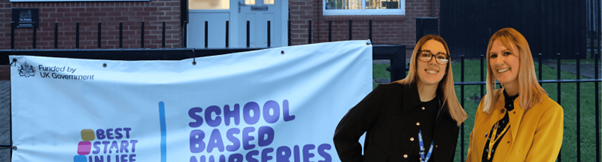
When you first step into The Meadow, something immediately strikes you: it doesn’t feel like a classroom at all.
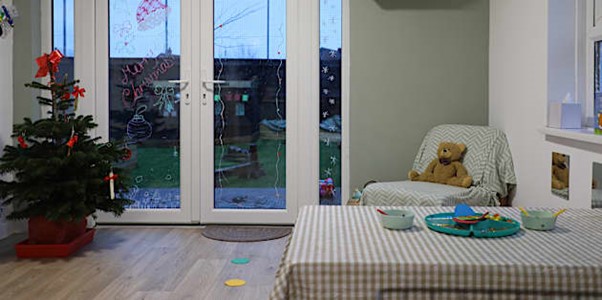
The soft furnishings, the warm light, the gentle hum of play – it feels like a home.
And that’s no coincidence. The Meadow lives inside what was once the school’s site manager’s house, carefully converted using the government’s school-based nursery capital funding.
Walls were opened up, corners softened, the garden reimagined. An empty house became a nursery – but importantly, it stayed a home.
Because this provision was never simply about childcare.

Copyright: Michelle Windridge. Used with permission
Why The Meadow matters
Based in Coventry, in the surrounding community, many children grow up surrounded by extended family – grandparents, aunties, cousins.
For some, this means warmth, connection and support. For others, it means moving between multiple homes, never quite sure where they belong.
Headteacher Mat Ascroft shared a recent conversation that he’d had with a child who couldn’t identify where ‘home’ was. ‘He had slept in five different family members’ houses, yet none of them felt like his place.’
That conversation crystallised why The Meadow needed to exist.
This isn’t just a nursery.
It’s a safe base.
A consistent space.
A place that says: you belong here.
Copyright: Michelle Windridge. Used with permission
Opening doors – literally and figuratively
Bringing two-year-olds into a primary school is no small feat. Many schools have shied away from it, and with good reason. The legalities, staffing ratios, environment requirements and curriculum considerations are overwhelmingly complex.
But six months ago, Stoke Primary decided to do it anyway.
Lucy Fox – Assistant Head and Foundations Lead – shared how Stoke Primary was the only school in Coventry to secure the school-based nursery grant, and the educator knew exactly how she wanted to use it: to give the very best start to as many children as possible.
Blueprints. Meetings. Legislations. Paintbrushes. More meetings. And finally, The Meadow was born.
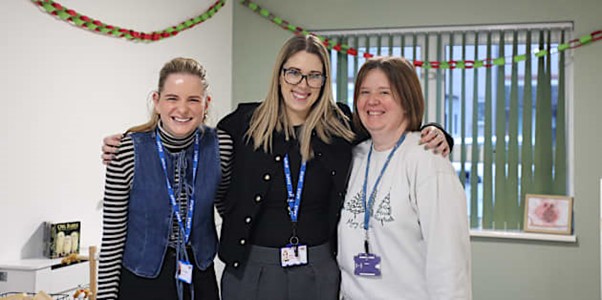
Lucy Fox with The Meadow staff, Alex Hughes and Lisa Beech. Copyright: Michelle Windridge. Used with permission.
Partnership at the heart
During my visit, Fox reflected on the support she received from a local Private, Voluntary and Independent (PVI) nursery during the development of this provision.
‘Their generosity-sharing expertise, helping navigate early years systems, offering practical advice, was instrumental.” Lucy describes it as “true partnership, a model of what can be achieved when schools and PVIs work together rather than compete.’
It’s a reminder that high-quality early years provision grows from collaboration.
The impact is real
Only six months since opening, and already measurable improvements are evident among Stoke’s youngest children.
Their communication and language skills have improved, with children showing greater ability to articulate views and respond to others.
They navigate their environment with growing confidence and independence.
Their relationships with peers and adults are characterised by secure attachments and positive social interaction.
They are fully integrated into the school community. The previously quiet building of The Meadow now hosts regular activity and interaction.
Most importantly, they walk in each morning with a sense of certainty: ‘This is my place. This is where I belong.’
A courageous step forward
Establishing The Meadow involved strategic planning, innovation, and resilience. The team approached the project with a willingness to explore new approaches. They took on the challenge of reshaping what primary education could look like.
And they have truly blossomed.
During my visit one parent told me how she has been blown away with how her child’s speech and language skills have developed in only a few weeks at The Meadow, and how the staff make every effort to ensure families feel welcome and included in their children's nursery experience.
Alex Hughes – The Meadow’s nursery teacher – shared that moving from key stage 1 to nursery was a big jump, but there is nowhere else that she would rather be.
He said: ‘It feels truly magical that our Early Years Foundation Stage (EYFS) journey now begins at age two for our children. Already, we have seen the positive impact the nursery has had, supporting children’s development, confidence and curiosity.’
Where next?
As we look at the impact The Meadow is already having, a bigger question emerges: Are we, as a sector, ready to rethink what ‘primary education’ really means?
If primary schools can be a home-from-home for two-year-olds…
If we can remove barriers for families who have never felt schools were their spaces…
If we can build trust, belonging and community from the very start…
…then perhaps the future of primary education is wider — and warmer — than we have dared imagine.
12 Dec 2025
 Leadership Teacher Teachers' Standards
Continuous Provision at Stoke Primary: A Seamless Learning Journey from Ages 2 to 7 and Beyond
Stoke Primary School is forging an exciting path in the development of continuous provision, extending a play-rich, inquiry-led pedagogy from Nursery through to Year 3 and, increasingly, across the wider school. In a climate where many schools feel the pressure to formalise learning earlier and earlier, Stoke stands out as a bold example of how deeply child-centred, research-informed practice can elevate outcomes, strengthen wellbeing, and create a culture of confident, independent learners.
Through close observation, pupil tracking, and in-depth conversations with staff and leaders, it is evident that Stoke’s approach is making a transformative difference to children aged 2 to 7, and to the adults who teach them.
The Power of Movement and Choice
What strikes me most as I walk through the school is how active and busy the children are—moving freely, out of their seats—yet the atmosphere remains calm, purposeful, and deeply focused. One of the clearest advantages of continuous provision is the natural physical movement it affords children. They are more active throughout the day, not having to ask permission to leave their seat, but trusted to do so in order to support their chosen learning path in that moment. In a traditional model, movement might be limited simply to transitioning from the carpet to a table. The contrast is stark. For many children, particularly those who rely on physicality to regulate or maintain focus, this movement is not an optional extra but a vital condition for success. Continuous provision embeds these opportunities throughout the day, ensuring that children are not confined to a single posture or workspace, but instead are empowered to choose how and where they learn best.
This freedom was beautifully illustrated in Year 3, where I observed children exploring star constellations. What could have been a simple worksheet-labelling activity became a rich, creative investigation. Each child used an individual basket to collect resources from The Pantry, selecting how they wished to map their constellation: some arranged shells into star patterns, others sculpted forms from playdough, while some chose the more traditional pencil-and-paper route. Every child had genuine autonomy over their learning. Once finished, they photographed their creations using an iPad and uploaded them to their personal learning journal—a process often seen in Early Years but far less typical in Key Stage 2.
Headteacher Matt Ascroft explained how this approach ensures every child is included. Some pupils know instantly how they want to present their work and dive straight in; others prefer to pause and process the teacher’s input before beginning. Both approaches are not only accepted but valued. This flexibility allows all learners to access the task at their own pace and in their own way, without pressure or constraint.
A Culture of Conversation and Deep Thinking
Another striking feature of Stoke’s provision is the richness of children’s talk. In a case study by Emma Lewry, pupils were observed to be engaged in discussion with peers or adults for approximately three-quarters of each session. This talk was purposeful and sophisticated: asking questions, articulating their thinking, reflecting on outcomes, negotiating roles, and even teaching one another skills and knowledge across a range of subjects. Importantly, children are encouraged to explore their ideas, take risks in their learning, and learn from their failures—understanding that mistakes are part of the process rather than something to be feared.
After the initial teacher input, the role of the teacher shifts to that of a facilitator, supporting children as they follow their own lines of inquiry and make decisions about how to pursue their learning. Research tells us that we should prioritise the development of children’s communication and language through socially meaningful interactions. Children thrive on conversation with people they have a strong relationship with, particularly when the discussion focuses on topics that interest them and are relevant to their experiences.
Continuous provision at Stoke evolves as children progress through the school. In the early years, learning is highly flexible, allowing for open-ended exploration. As children move into Key Stage 1 and then Key Stage 2, the provision adapts: older pupils are introduced to weekly “must do” challenges that provide structure and clear objectives, while still allowing them to exercise choice, collaborate with peers, and pursue their own interests. This approach ensures that the benefits of continuous provision—independence, active learning, and rich dialogue—are maintained, while gradually incorporating the level of guidance and expectation appropriate to each stage of development.
This constant dialogue is not incidental but a product of carefully planned, open-ended learning environments and highly intentional adult interaction. It is conversation that fuels cognition, deepens understanding, nurtures curiosity, and promotes social and emotional development.
From ages 2 to 7—and increasingly beyond—Stoke Primary is showing what is possible when schools trust children, invest in teachers, and commit to a pedagogy that sees capability, curiosity, and potential in every learner.